Any time contractors work on an active aerodrome, the normal rhythm of the airport changes. Runways may be closed. Taxiways may be restricted. Ground crews and construction crews may be sharing the same space. This is exactly why the Civil Aviation Safety Authority requires a Works Safety Officer whenever work could affect aircraft operations.
OZ Airports is one of Australia’s leading providers of qualified WSOs, supporting Defense bases and civil aerodromes nationwide. This guide explains what a WSO actually does, why the role matters, and how OZ Airports helps aerodrome operators meet their obligations without disrupting daily operations.
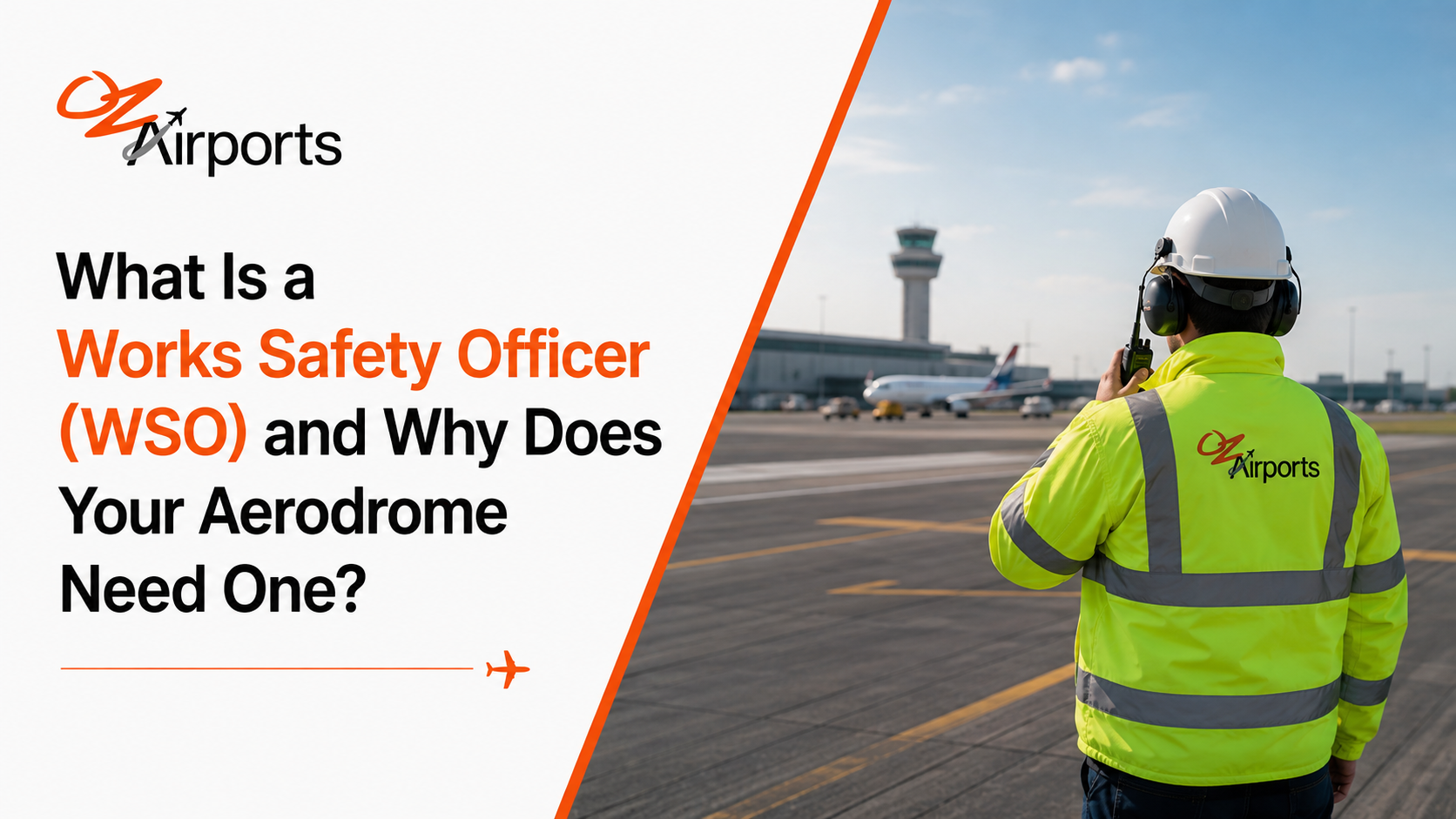
What Is a Works Safety Officer
A Works Safety Officer is often confused with a general workplace health and safety officer. They are not the same role.
As OZ Airports explains, workplace health and safety is everyone’s responsibility, but a WSO is not a WHS expert. A WSO is an aviation safety expert.
The core purpose of the role is to:
- Protect the safety of aircraft and airport services during works
- Ensure that construction or maintenance activity does not affect operational safety
- Manage the impact of closures to runways, taxiways, and other movement areas
- Act as the point of coordination between contractors and airport operations
In short, a WSO exists to keep aviation safe while work is happening on the ground.
Why the WSO Role Exists
Airside works change how an aerodrome normally functions. Portions of the movement area may need to close, making them temporarily unavailable to aircraft.
Without proper oversight, this creates real risk. A well trained WSO reduces that risk by managing the works so they have minimal operational impact on airlines and other aircraft using the aerodrome.
On larger or more complex projects, a single WSO may not be enough. Multiple WSOs are sometimes required to manage several disparate work sites at the same time, particularly during major infrastructure upgrades.
When Does an Aerodrome Need a WSO
Under CASA regulations, a WSO is required whenever contractor activity on an aerodrome could affect aircraft operations. This typically applies to projects such as:
- Runway or taxiway resurfacing
- Airfield lighting replacement or upgrades
- Drainage or civil works near movement areas
- New building or infrastructure construction airside
- Any works requiring temporary closure of part of the movement area
Regional airports often face a particular challenge here. According to OZ Airports, large scale works projects at regional aerodromes are frequently only undertaken once every 15 to 20 years. This means permanent airport staff may have never managed a major works project before, and internal capacity is often stretched by the added workers and equipment such projects bring.
Why Your Aerodrome Needs a Qualified WSO
Bringing in an experienced WSO is not just about meeting a compliance checkbox. It solves several practical problems for airport operators.
1. Supplementing Staff Capacity
Daily airport duties do not stop just because a work project is underway. A WSO adds capacity without pulling permanent staff away from their existing responsibilities.
2. Bringing Proven Experience
Corporate level experience managing airport works programs, gained across multiple aerodromes and states, is difficult to replicate in house, especially at aerodromes where these projects are rare.
3. Reducing Operational Disruption
A skilled WSO plans closures and works activity carefully, aiming to keep the impact on flight operations as low as possible.
4. Meeting CASA Obligations
Engaging a properly trained WSO ensures the aerodrome operator satisfies CASA requirements for work safety oversight, protecting both safety outcomes and regulatory standing.
How OZ Airports Supplies WSOs Nationwide
OZ Airports describes itself as the leader in the provision of WSOs in Australia, with more than 50 fully qualified and trained WSOs on staff.
This scale supports rapid deployment across the country. Key aspects of the OZ Airports model include the following.
- WSOs are strategically based in each Australian state to reduce travel time and mobilisation costs.
- Staff are routinely engaged across a dozen concurrent airport works safety projects at any given time.
- Staffing levels can be scaled up or down as a project reaches different milestones, keeping costs proportional to actual need.
- Every WSO is backed by a senior management team with decades of experience in Air Traffic Control, airline operations, and aviation safety management.
This combination of national coverage and specialist experience is a key reason aerodrome operators choose OZ Airports over generalist labour hire providers.
WSO Training Delivered Under CASA Authority
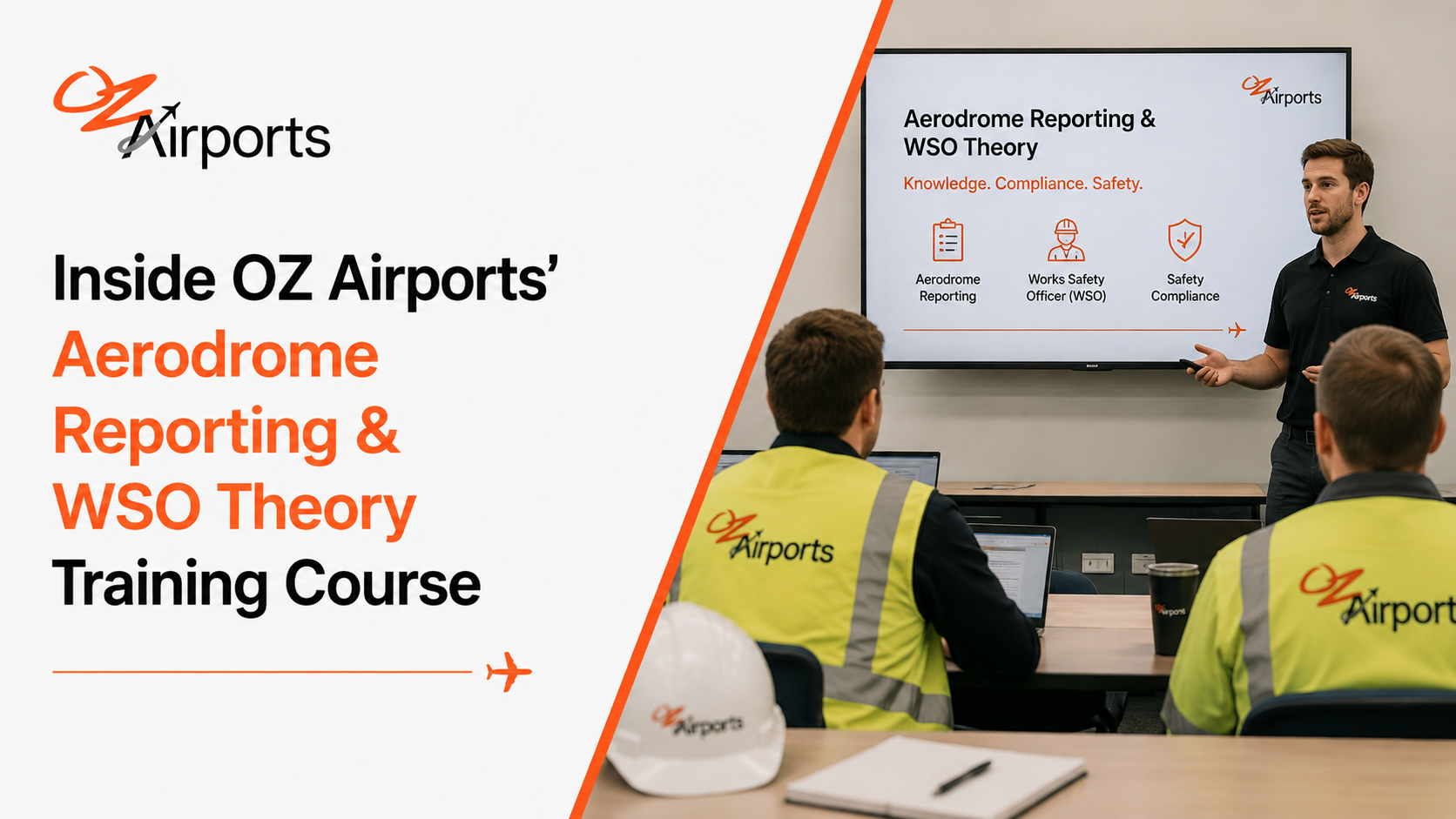
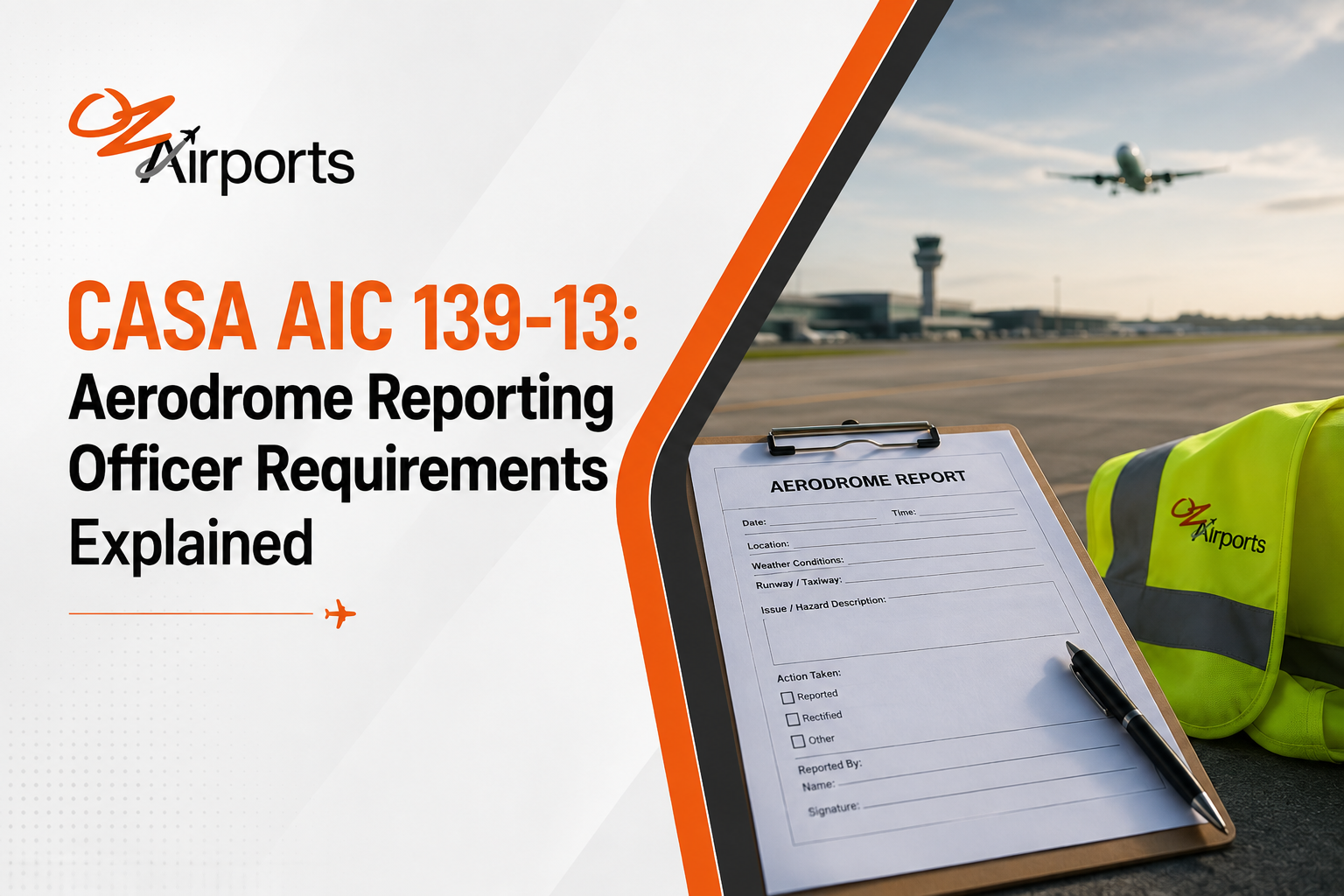
Beyond supplying WSOs, OZ Airports also trains them. The company holds a CASA instrument of authority for training delivery and provides Aerodrome Reporting and Works Safety Officer Theory Training in accordance with CASA AIC 139-13.
This training gives new Aerodrome Reporting and Works Safety Officers the theory base they need before completing on the job airport training detailed in the Aerodrome Manual. Courses are usually delivered on site at the client aerodrome, at times that suit the operator, and are mapped to the AVISS00053 Aerodrome Reporting Officer Skill Set.
OZ Airports also runs refresher training designed to meet CASA currency recommendations, helping existing AROs and WSOs maintain their qualifications over time.
Why Aerodrome Operators Rely on OZ Airports
- Veteran Owned: OZ Airports is a proud member of the Australian Veteran Owned Business initiative.
- Proven Delivery: The company has completed more than 60 major aerodrome works projects.
- Purpose Built Fleet: OZ Airports operates over 30 airside vehicles, each fitted with more than $15,000 of additional CASA compliant features.
- CASA Authorised Training: OZ Airports holds a CASA instrument of authority for delivering WSO and ARO theory training.
- Experienced Leadership: Senior staff bring careers built in Air Traffic Control, airline operations, and aviation safety management.
- National Coverage: State based teams allow fast mobilisation to aerodromes anywhere in Australia.
Frequently Asked Questions
What is the difference between a WSO and a WHS officer?
A WHS officer manages general workplace health and safety. A WSO is a specialist in aviation safety, focused specifically on ensuring work does not affect aircraft operations.
Is a WSO always required for airport work?
A WSO is required whenever contractor activity on an active aerodrome could affect aircraft operations, in line with CASA regulations.
How many WSOs does a project need?
This depends on project size. Smaller projects may need only one WSO, while larger or more complex projects with multiple work sites may require several.
How quickly can OZ Airports deploy a WSO?
OZ Airports specialises in short notice deployment across Australia. Staff are prequalified to the company ARO and WSO standard and based in every state, allowing fast mobilisation.
Do OZ Airports also train WSOs?
Yes. OZ Airports holds a CASA instrument of authority and delivers WSO theory training in accordance with CASA AIC 139-13, along with refresher courses to maintain currency.
Do OZ Airports support Defence aerodromes as well as civil airports?
Yes. OZ Airports supports both Defence base commanders and civil aerodrome operators with WSO deployment, staff relief, and CASA compliant training.
Talk to OZ Airports About Your Next Works Project
A qualified WSO protects your aerodrome, your contractors, and every aircraft using the airfield during work. With over 50 trained WSOs, a fleet of purpose built vehicles, and staff based in every state, OZ Airports is ready to support your next project.
Contact OZ Airports today to discuss WSO deployment or training for your aerodrome.