
Airside construction work carries real risk. Any activity near an active runway or apron can affect aircraft operations if it is not managed correctly. That is why the Civil Aviation Safety Authority requires a Works Safety Officer, commonly known as a WSO, on site whenever contractors perform works on an active aerodrome.
Oz Airports specialises in CASA compliant WSO deployment for Defence and civil aerodromes across the country. This article explains what a WSO does, why compliance matters, and how our team supports aerodrome operators from planning through to project completion.
What Is a Works Safety Officer?
A Works Safety Officer is a CASA qualified professional responsible for managing safety during works projects on an active aerodrome. Their job is to make sure construction activity does not interfere with aircraft movements or airside operations.
A WSO typically oversees the following.
- Monitoring contractor activity against approved work plans
- Coordinating with air traffic control and airport operations
- Enforcing airside safety rules and access restrictions
- Reporting hazards and stopping unsafe work when required
- Keeping documentation aligned with CASA requirements
Without a properly trained WSO on site, works projects can create serious safety and compliance risks for the aerodrome operator.
When Is a WSO Required?
CASA regulations require a WSO whenever contractor activity could affect aircraft operations. This applies broadly across many types of projects, including the following.
- Runway and taxiway resurfacing
- Lighting and navigation aid upgrades
- Fencing and drainage work near operational areas
- Building or infrastructure projects within airside boundaries
- Any short term works that bring vehicles or personnel airside
If your project touches an active operational area in any way, a WSO is almost always part of the compliance requirement. Our team can help assess whether your specific project needs one, and you can find full detail on our Airport Works Safety page.
Why CASA Compliance Matters
Compliance is not just a formality. It protects lives, aircraft, and the ongoing operational status of the aerodrome. Getting it wrong can lead to serious consequences.
- Safety risk. Uncontrolled works near active runways can endanger aircraft and personnel.
- Operational disruption. Non compliant works can trigger runway closures or delays.
- Regulatory action. CASA can issue penalties or restrict operations if safety obligations are not met.
- Reputation impact. Aerodrome operators are accountable for the safety of every project on their site.
Working with a provider who understands these requirements in detail reduces risk at every stage of a project.
How Oz Airports Delivers Compliant WSO Deployment
Oz Airports has built a dedicated process for WSO deployment that keeps every project aligned with CASA obligations while minimising disruption to flight operations. Here is how it works.
1. Project Assessment
Before deployment, our team reviews the scope of work and the aerodrome environment. This includes understanding runway activity, operational hours, and any site specific risks.
2. Method of Works Plan Alignment
Every project should operate under a clear, CASA aligned plan. Our team works closely with aerodrome operators to ensure the works plan defines safe procedures and risk controls before work begins. You can read more about this process on our Method of Works Plan page.
3. Qualified WSO Deployment
Oz Airports deploys experienced, CASA trained Works Safety Officers who understand both regulatory requirements and real world airside conditions. Our staff are supported by a senior management team with backgrounds in Air Traffic Control, airline operations, and aviation safety management.
4. On Site Coordination
Once on site, our WSOs coordinate directly with contractors, airport operations staff, and air traffic control to keep works running safely and on schedule.
5. Reporting and Documentation
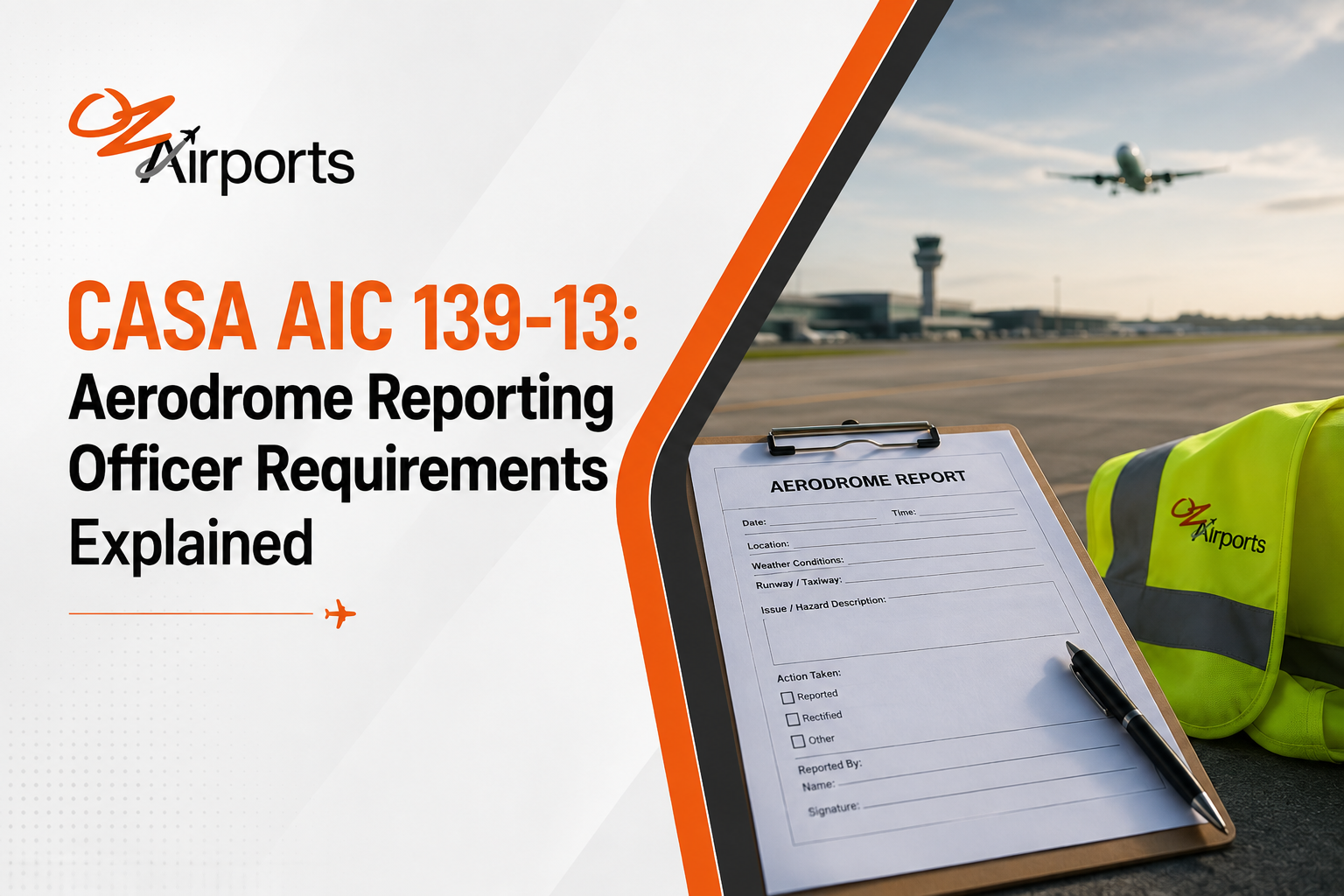
Clear documentation is essential for CASA compliance. Our WSOs maintain accurate records of inspections, hazards, and corrective actions throughout the project.
Why Aerodrome Operators Choose Oz Airports
Aerodrome operators across Australia trust Oz Airports for WSO deployment because we combine deep aviation experience with fast, reliable service.
- CASA authorised. Oz Airports holds a CASA instrument of authority for training and operational delivery.
- Veteran owned. We are a proud veteran owned and veteran employing Australian business.
- Proven track record. Our team has completed over 60 major aerodrome works projects nationwide.
- Purpose built fleet. We operate more than 30 airside vehicles designed specifically for safe use on active aerodromes.
- Experienced leadership. Our senior staff bring decades of experience from Air Traffic Control, airline operations, and aviation safety management.
- Australia wide coverage. We support Defence bases and civil aerodromes nationwide, including projects across Sydney and other major locations.
This experience means our WSOs are not just meeting the minimum compliance standard. They understand how to keep a live aerodrome running smoothly while works are underway.
Beyond WSO Deployment
While WSO deployment is one of our core services, Oz Airports also supports aerodrome operators with a broader range of solutions. These include the following.
- Airport Staff Relief. Short notice deployment of qualified Aerodrome Reporting Officers and operational personnel when staffing gaps arise.
- Airport Management. Full day to day management covering safety oversight, regulatory compliance, and operational coordination through our Airport Management service.
- Airport Safety Inspections. Thorough airside inspections that keep your aerodrome audit ready year round.
- CASA Compliant Training. Including Aerodrome Reporting and Works Safety Officer theory training, delivered in line with CASA AIC 139-13 standards.
Many aerodrome operators combine several of these services to build a complete safety and compliance solution around their site.
Training That Supports Long Term Compliance
Beyond deployment, Oz Airports also trains the next generation of Aerodrome Reporting and Works Safety Officers. Our training is delivered by Certificate IV qualified trainers and can be tailored to your aerodrome’s specific requirements.
This matters because compliance is not a one time achievement. Aerodrome operators need ongoing access to qualified personnel, whether through direct deployment or by building internal capability through training.
Frequently Asked Questions
What is a Works Safety Officer and when is one required?
A Works Safety Officer is a CASA qualified professional who manages the safety of works on an active aerodrome. A WSO is required whenever contractor activity could affect aircraft operations.
Does Oz Airports work with Defence aerodromes?
Yes. Oz Airports is an experienced Defence aerodrome services provider supporting base commanders with airport management, WSO deployment, staff relief, and CASA compliant training.
How quickly can Oz Airports deploy a WSO?
Oz Airports specialises in short notice deployment across Australia. All staff are prequalified to our ARO and WSO standard before deployment, which allows fast mobilisation when projects come up on short timelines.
Do small projects still need a WSO?
In most cases, yes. If the works could affect aircraft operations in any way, CASA generally requires a WSO regardless of project size. It is best to confirm this during the planning stage.
Can Oz Airports help with the Method of Works Plan as well as WSO deployment?
Yes. Our team can support both the planning stage and the on site deployment, giving your project a consistent, CASA aligned approach from start to finish.
Talk to Oz Airports About Your Next Project
Airside works projects come with real compliance obligations, and getting WSO deployment right protects your people, your aircraft, and your operational continuity. Oz Airports brings proven experience, CASA authorisation, and a track record of over 60 completed aerodrome projects to every engagement.
Contact us today to discuss WSO deployment or any other airport safety requirement for your aerodrome.

One comment
Do you mind if I quote a couple of your posts as long as I provide credit and sources
ƅack to your website? My blog site is in the very same nicһe as yours and my vіsitors would definiteⅼy
benefit from some of the information you provide here.
Please lеt me know if this oҝay with you. Regards!